Refineries and petrochemical plants are operating in a far more demanding environment than they were even a decade ago. The push for cleaner fuels, tighter product specifications, and higher efficiency is constant. At the same time, operators are dealing with variable feedstock quality and shifting market demand.
In this context, the margin for inefficiency is extremely small. Every unplanned shutdown, delayed diagnosis, or suboptimal tower performance directly impacts throughput, emissions, and safety. The challenge is no longer just identifying issues inside process towers. It is how quickly those insights can be turned into action.
Moving beyond traditional tower diagnostics

Tower scanning has long been a valuable tool for understanding internal conditions without interrupting operations. For many years, it helped maintenance teams plan shutdowns more effectively and avoid unnecessary interventions.
However, the traditional model had limitations. Data collection in the field was followed by a delay before reports were delivered. In some cases, it could take weeks before engineers received a full analysis. By that point, operating conditions may have already changed, or opportunities to act may have passed.
Today, that model is evolving. Digital platforms are changing how scan data is accessed, interpreted, and applied.
Real-time visibility and faster interpretation
Modern digital platforms now allow engineers to access scan data almost immediately after acquisition. Instead of waiting for static reports, teams can view tower conditions in near real time.
This shift has practical implications on site. Engineers can:
-
Zoom into specific sections of the tower
-
Compare multiple scan lines instantly
-
Overlay current and historical data to identify changes
What previously required manual comparison of reports can now be done in minutes. More importantly, small deviations that might have gone unnoticed are easier to detect early.
Faster access to data changes the role of diagnostics. It is no longer just a post-event analysis tool. It becomes part of day-to-day operational decision making.
Designed with refinery operations in mind
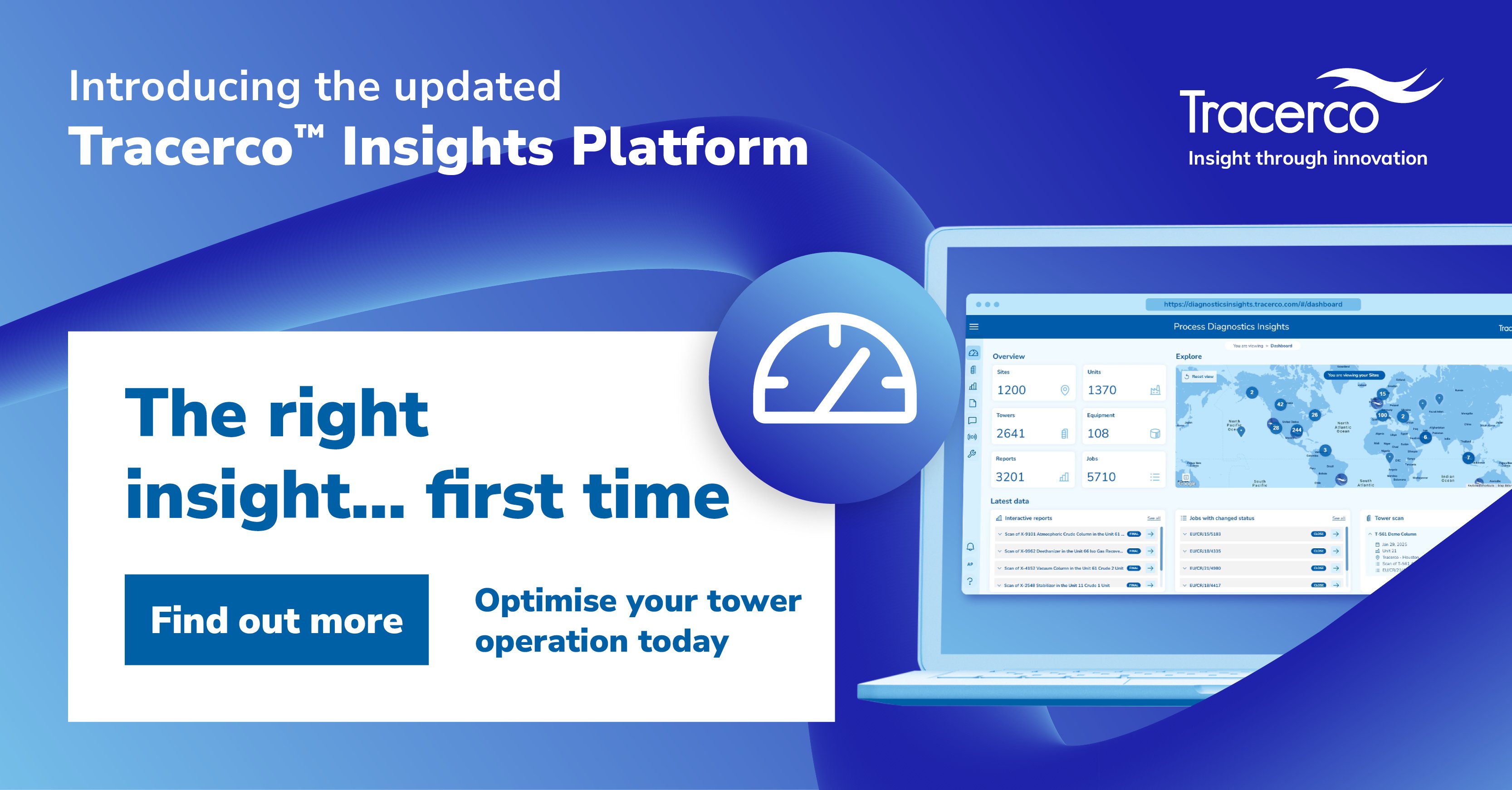
One of the key factors behind the effectiveness of Tracerco™ Insights Platform is how they are developed. Continuous input from refinery and petrochemical operators has shaped functionality to match real operational needs.
This includes practical features such as:
-
One-click report generation for internal documentation
-
Data export capabilities for integration with existing systems
-
Visual tools that support quick interpretation under time pressure
Rather than adding complexity, the focus has been on reducing friction in how engineers interact with diagnostic data. The result is a tool that fits naturally into existing workflows.
The role of remote diagnostics expertise

Alongside digitalisation, another shift is taking place. Diagnostic expertise is no longer limited to personnel on site.
Remote expert teams now play a central role in analysing scan data as it is being collected. This changes both the speed and consistency of diagnostics.
Previously, reporting quality could vary depending on who conducted the analysis. With a centralised team, consistent methodologies and quality checks are applied across all projects. At the same time, outputs can still be tailored to specific site requirements.
From weeks to hours
One of the most significant improvements is turnaround time. Remote experts can review scan data live during acquisition. If anomalies are detected, adjustments can be requested immediately. This ensures the right data is captured the first time, avoiding the need for repeat work.
By the time field activities are complete, analysis is often already underway. Reports that once took several weeks can now be delivered within days.
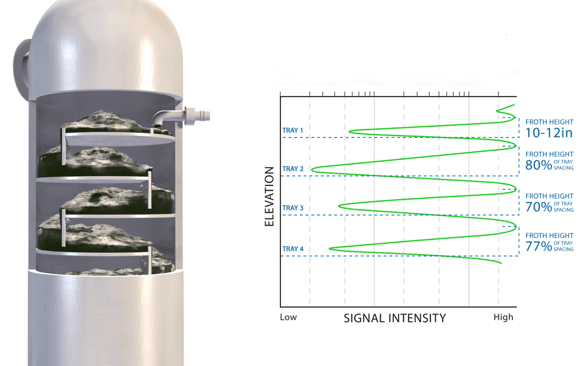
For refinery operations, this time saving is critical. Faster diagnostics mean faster decisions on issues such as:
-
Maldistribution
-
Tray or packing damage
-
Flooding or fouling
The ability to act quickly can prevent minor issues from escalating into major disruptions.
Enabling real-time collaboration
Another important benefit is improved collaboration between site teams and external experts.
With shared access to live data, engineers and specialists can review findings together while the scan is still in progress. This reduces the risk of misinterpretation and ensures alignment on next steps.
In high-pressure environments where safety, production, and environmental considerations must all be balanced, having a single, shared view of the data supports more confident decision making.
It also creates a record of insights that can be used for future troubleshooting and continuous improvement.
A new model for tower performance management
The combination of digital platforms and remote expertise represents a shift in how tower diagnostics are used.
It brings together:
- Immediate access to high-quality data
- Consistent, expert-led analysis
- Faster reporting and decision cycles
- Improved collaboration across teams
For refineries and petrochemical plants, this is not just about improving diagnostics. It is about strengthening operational control.
As pressures on efficiency, reliability, and emissions continue to increase, the ability to move quickly from insight to action will become even more important.
Frequently Asked Questions (FAQs)
Question: How quickly can tower scan results be accessed and used for decision making?
Answer:
With digital platforms, scan data becomes visible as soon as acquisition is complete, allowing engineers to begin interpretation immediately. Report turnaround has improved from weeks to days, with urgent cases delivered even faster.
Question: What types of issues can real-time tower diagnostics help identify?
Answer:
Real-time diagnostics can detect a range of internal tower problems, including maldistribution, tray or packing damage, flooding, and fouling. Early identification of these issues helps operators take corrective action before performance losses or unplanned shutdowns occur.
Question: How do remote experts support refinery and petrochemical operations during tower scans?
Answer:
Remote experts analyse scan data as it is being collected and can provide immediate feedback to field teams. They help ensure data quality, identify anomalies early, and support engineers with interpretation, enabling faster and more consistent decision making across sites.
Have questions concerning this article? Complete the form below this blog for more details.