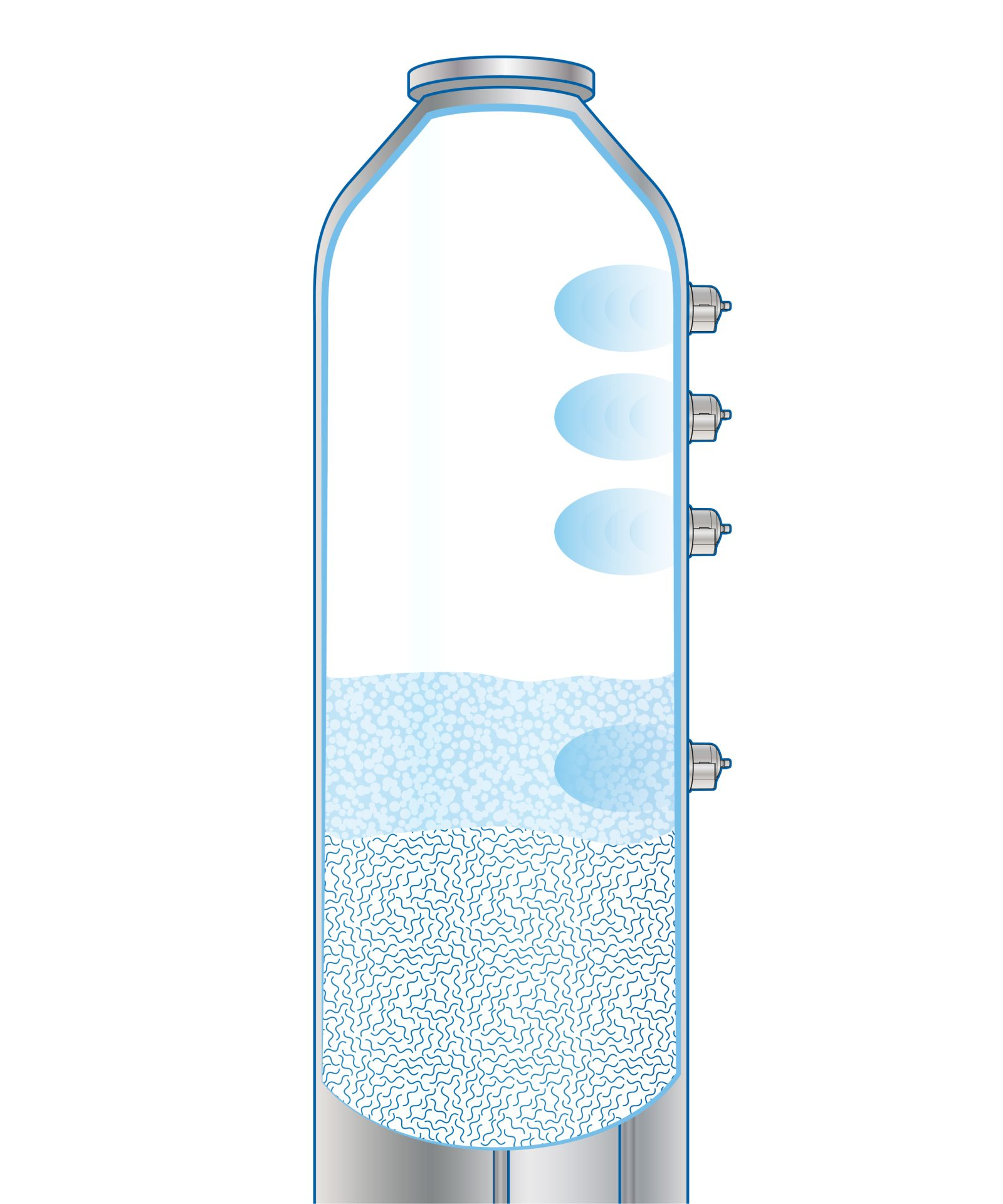
Inside a delayed coker, the transition between foam and coke is more than simply a change in material. Knowing where that transition occurs can be important when managing the coking cycle and protecting the operation from unwanted events such as foam-over.
This is one of the reasons understanding the foam-to-coke interface is an important consideration when selecting coke drum monitoring technology.